
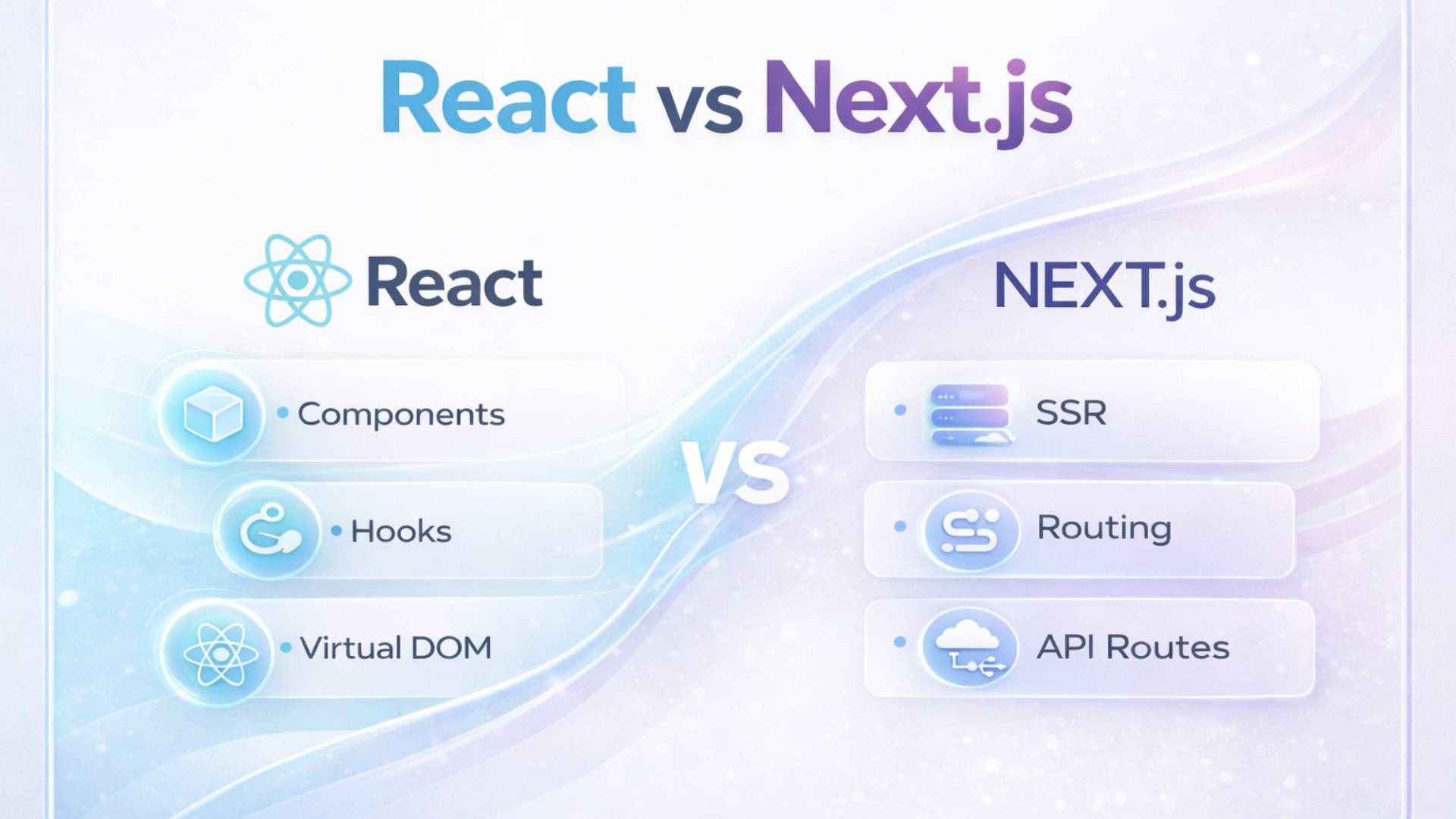
Confused between React and Next.js? Discover key differences, SEO benefits, and performance insights to choose the best framework.
Introduction to Web Development in 2026
The IT sector is rapidly growing, driven by on-demand user interfaces and modern programming languages. When we talk about web development, it is an interactive platform used to create and build dynamic websites. It includes web design, web publishing, web programming, and database management.
Data in an organization is organized, stored, and managed using a data management system, which helps handle web-based software and applications efficiently.

Why Are JavaScript Frameworks Important in 2026?
JavaScript is the backbone of modern web development. It has supported and enhanced systems for many years, evolving from building simple websites to powering complex web applications.
JavaScript frameworks improve:
- User interface responsiveness
- Performance and scalability
- User interaction and engagement
They make applications more dynamic and user-friendly, allowing users to interact seamlessly and improving overall usability.
What is React?
React is a component-based JavaScript library used to build dynamic and interactive user interfaces. It focuses on performance and maintainability, making it easy to create single-page applications (SPAs).

Key Concepts in React
1. Component
React works with components, which are small, reusable building blocks of a website.
Examples include:
- Navigation bars
- Buttons
- Footers
Developers reuse these components instead of creating them from scratch, improving efficiency.
2. JSX (JavaScript XML)
JSX allows developers to write HTML-like code inside JavaScript, making UI development easier and more readable.
3. Div
A
is used to structure and design a web page. It can contain text, images, buttons, and other elements. 4. DOM (Document Object Model)
The DOM is a programming interface that represents a web page as a tree structure. It allows JavaScript to interact with and dynamically manipulate the content.
Example of React
- Import React: Import the React library
- Create Component: Define a functional component (e.g., App)
- Return Statement: Returns JSX (e.g., a
- with "Hello, World!")
- Export Default App: Exports the component for reuse
What is Virtual DOM?
The Real DOM represents the actual structure of a web page created by the browser.
The Virtual DOM is a lightweight copy of the Real DOM stored in memory. React uses it to track changes efficiently and update only the necessary parts of the UI, improving performance.
What is Next.js?
Next.js is a powerful framework built on top of React that helps developers create fast, scalable, and SEO-friendly web applications without complex configuration.
It provides built-in features like:
- Server-side rendering
- Static site generation
- Routing
- API handling
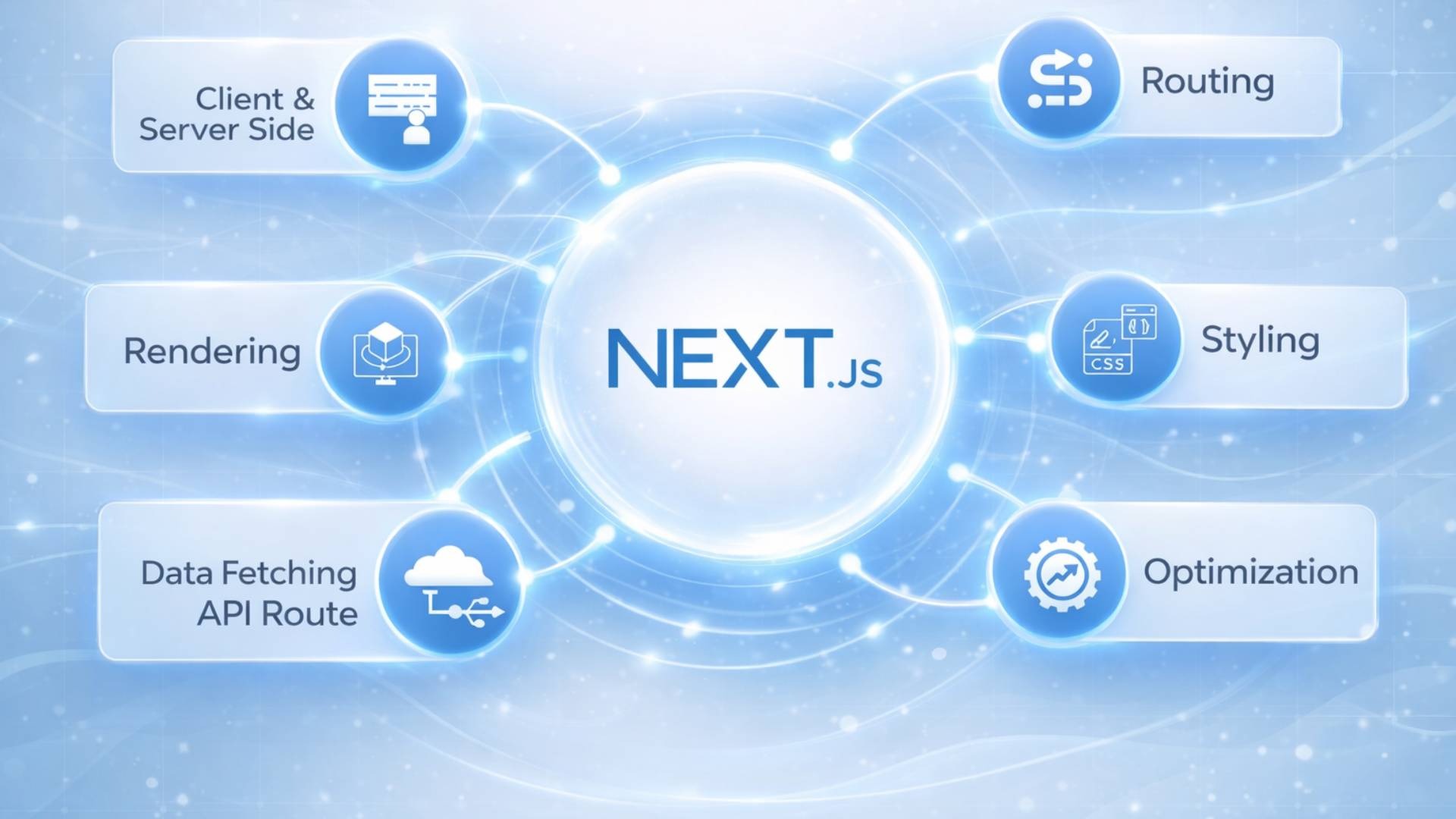
Features of Next.js
1. Server-Side Rendering (SSR)
Pages are generated on the server for each user request, improving initial load performance and SEO.
2. Static Site Generation (SSG)
Pages are generated at build time and served as static HTML files, resulting in faster loading and reduced server load.
3. Automatic Code Splitting
Next.js splits JavaScript code into smaller chunks, improving performance and reducing load time.
4. CSS Support
Next.js supports:
- CSS Modules
- Global CSS
- CSS-in-JS libraries
This helps in better styling and structuring of web pages.
5. Data Fetching
Next.js provides multiple data-fetching methods, such as:
getStaticProps
getServerSideProps
API routes
These methods allow efficient data handling based on application needs.
6. Routing
Routing defines navigation paths within a web application. In Next.js, routing is automatically handled based on the file structure inside the pages directory, making development simpler.
React vs Next.js
The main difference:
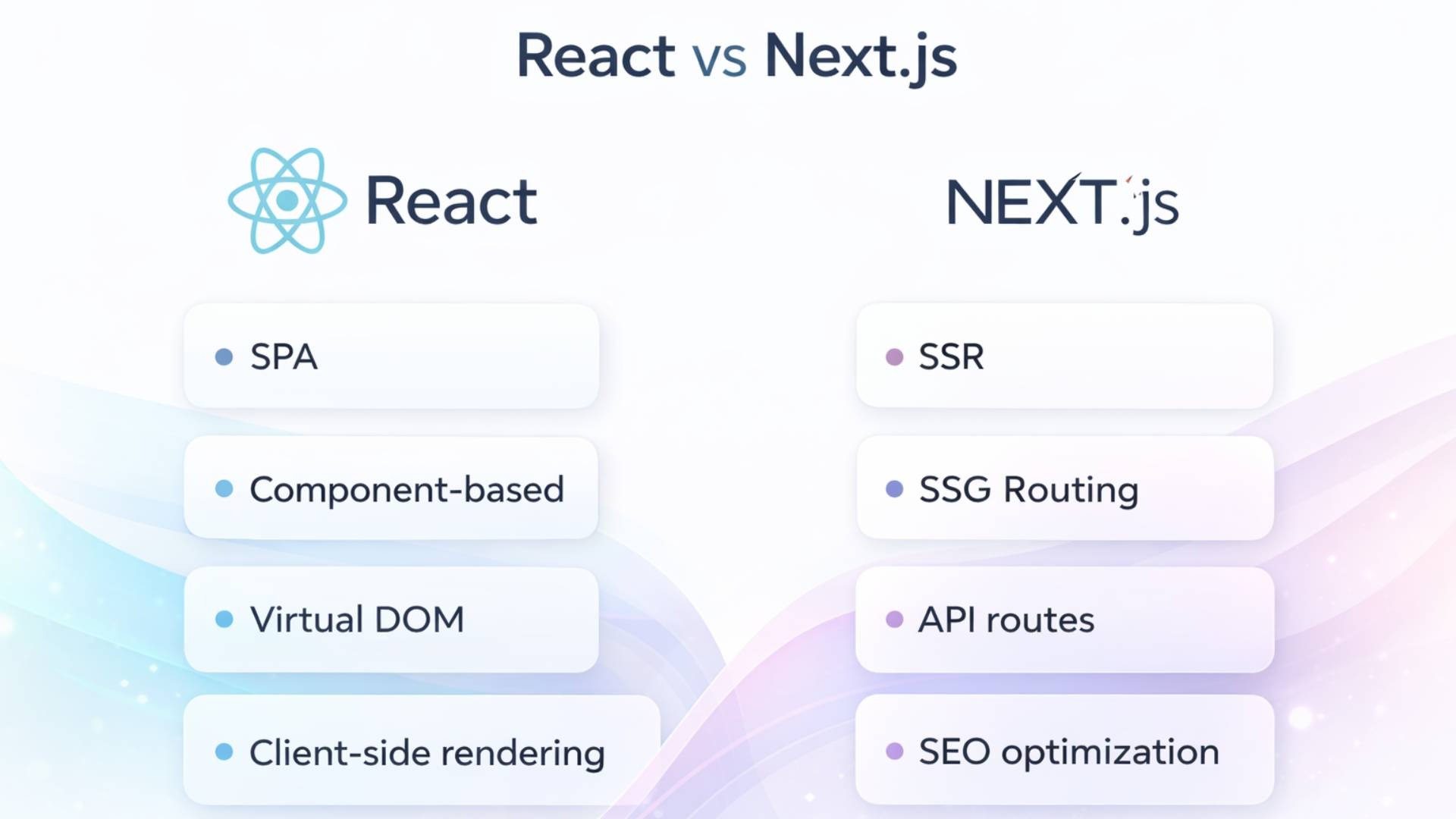
React is a JavaScript library used to build user interfaces.
Next.js is a full-stack framework built on React with additional features like SSR, SSG, and routing.
Conclusion
React provides a strong foundation for building dynamic and interactive user interfaces. Next.js enhances React by adding powerful features such as file-based routing, server-side rendering, and static site generation.
Together, they enable developers to build fast, scalable, and SEO-friendly web applications, making them an ideal combination for modern web development in 2026.
“React builds the interface, Next.js powers the experience.”